
Job at a Glance
- Salary
- Not disclosed
- Posted
- November 9, 2026
Working in Sharjah is the UAE’s best-kept bargain: rents run roughly half of Dubai’s, a one-bedroom flat averaging around AED 2,800 to AED 3,050 a month against Dubai’s AED 9,000-plus in the centre, while salaries run lower too — Numbeo’s October 2026 figure puts the average monthly net salary at about AED 8,090. A single professional can live comfortably on around AED 6,000 to AED 8,000 a month, excluding savings. If your job is in Sharjah, or you are happy to commute to Dubai, the sums work out well — but check current rents and salaries before you sign, because both move.
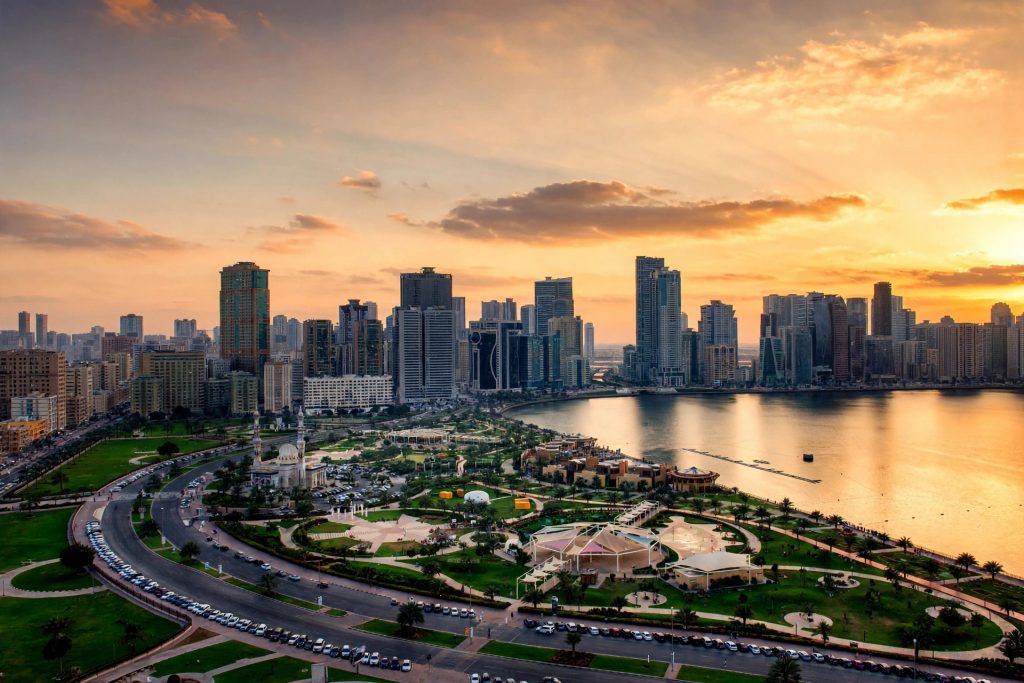
Sharjah sits right next to Dubai — so close that the two cities blur into one another along Sheikh Mohammed bin Zayed Road — yet it feels like a different place. It is the UAE’s cultural capital, home to the Sharjah Museums, the University City, and the book fair, and it is also the most conservative emirate, with a dry law on alcohol and a stricter public tone. For a job seeker, Sharjah offers something Dubai and Abu Dhabi do not: a genuinely affordable life on a mid-level salary, plus a large, steady job market of its own in education, manufacturing, logistics, and government.
What Jobs Are Actually in Sharjah?
Sharjah’s job market is broader than most people expect. Education is a big employer: the University of Sharjah, the American University of Sharjah, and dozens of public and private schools hire teachers, lecturers, and administrators, and the University City area is a whole employment district on its own. Government is another pillar — the Sharjah government departments hire across administration, engineering, health, and culture, with Emiratisation preference applying as it does elsewhere.
Manufacturing and industry matter more here than in Dubai. Sharjah Industrial Area, one of the largest industrial zones in the region, hosts factories, workshops, and trading companies that hire engineers, technicians, machine operators, logistics staff, and sales teams. The Hamriyah Free Zone and the Sharjah Airport International Free Zone (SAIF Zone) add trading, logistics, and light manufacturing roles, and the port at Khor Fakkan on the east coast brings shipping and port jobs.
Healthcare is growing fast, with University Hospital Sharjah and a network of clinics hiring doctors, nurses, and technicians. Retail and hospitality exist — the malls on the Corniche and the hotels along the waterfront — but the volume is smaller than Dubai’s. And then there is the quiet giant of the Sharjah job market: the Dubai commute. Thousands of people live in Sharjah and work in Dubai, trading a longer drive for a much cheaper flat, and that shapes the whole emirate’s economy.
Salaries: What Can You Expect to Earn?
Salaries in Sharjah run lower than in Dubai and Abu Dhabi, and you should go in with your eyes open about that. Numbeo’s crowdsourced average monthly net salary for Sharjah in October 2026 was about AED 8,090, against about AED 13,530 for Dubai and AED 11,265 for Abu Dhabi. One 2026 cost comparison put the average salary in Sharjah at around AED 12,000, against AED 18,000 in Dubai and AED 17,500 in Abu Dhabi. The two figures disagree because they measure different things, but the direction is the same: expect less, and judge the offer by what is left after the lower costs.
As a rough guide, based on commonly published 2026 ranges: teachers in Sharjah commonly earn AED 7,000 to AED 14,000 a month, often with housing support; nurses typically earn AED 6,000 to AED 12,000; engineers in industry and manufacturing often earn AED 10,000 to AED 22,000; admin and customer service staff generally earn AED 4,000 to AED 8,000; and drivers, cleaners, and labourers generally earn AED 2,000 to AED 4,000. These are broad ranges, not promises. Check current listings for your exact role, and weigh the whole package — housing, flights, schooling, medical — not just the basic salary.
Sharjah pay and rent — at a glance (Oct–Nov 2026, check current figures)
| Item | Typical range | Source / note |
|---|---|---|
| One-bedroom flat, city centre | Around AED 2,800–3,050 a month | Numbeo, Oct 2026; Expat.com guide gives AED 2,500–3,750 a month |
| One-bedroom flat, outside the centre | Around AED 2,900–3,350 a month | Numbeo, Oct 2026 |
| Three-bedroom flat, city centre | Around AED 5,500–6,650 a month | Numbeo, Oct 2026 |
| Studio flat, annual rent | About AED 20,000–28,000 a year | Bayut / PropertyFinder data, 2024–2025 |
| Average monthly net salary | About AED 8,090 | Numbeo, Oct 2026 — crowdsourced average across all roles |
| Utilities (85 m² flat) | About AED 710–825 a month | Numbeo, Oct 2026 — note Sharjah utilities run higher than Dubai’s |
| Single professional monthly budget | About AED 5,450–7,950, including rent | 2026 cost guides; check current prices |
Where to Live: The Neighbourhoods That Matter
Sharjah’s neighbourhoods split into two groups: the waterfront and Corniche areas, and the big residential districts inland. Al Majaz is the most popular choice for professionals — the waterfront, the cafes, the fountains, and a short drive to Dubai. Al Qasimia, Al Nahda, and Al Taawun are dense, practical, and popular with families, with good schools and supermarkets close by. Al Khan and Al Mamzar sit near the Dubai border, which suits commuters, though traffic at the border crossings is the daily reality there.
Further out, Muweilah and the University City area suit people working in education, with newer buildings and quieter streets. Al Hamriyah and the areas near the industrial zones suit people working in manufacturing and logistics. On the east coast, Khor Fakkan and Kalba are a different world — small coastal towns with port and tourism jobs, a slower pace, and much lower rents, but far from the Dubai job market.
Everyday Costs: Where the Savings Really Are
Rent is the headline saving, and it is a big one. A one-bedroom in Sharjah at around AED 3,000 a month against AED 9,000-plus in central Dubai saves you roughly AED 6,000 a month — AED 72,000 a year. That single difference is why so many people choose Sharjah, and why so many Dubai workers live here and commute.
But rent is not the whole story. Utilities in Sharjah run higher than you might expect: Numbeo’s October 2026 figures put basic utilities for an 85-square-metre flat at around AED 770 a month, against about AED 895 in Dubai — not much lower, and higher than Abu Dhabi’s roughly AED 700. Sharjah’s electricity and water authority, SEWA, sets the tariffs, and summer air-conditioning bills surprise newcomers. Groceries cost about the same as in Dubai, with the same supermarkets — Carrefour, Lulu, Spinneys — charging similar prices across the emirates. Eating out is a little cheaper, and the small cafeterias and shawarma shops that line the Corniche are genuinely good value.
Schooling is where Sharjah shines for families. Private school fees commonly run from around AED 10,000 a year at the lower end to AED 50,000 or more at the top, generally lower than the equivalent Dubai schools. Several well-regarded Indian, Pakistani, and British-curriculum schools sit in the AED 15,000 to AED 35,000 range. If your package includes a schooling allowance, it stretches further here than it does in Dubai. Healthcare is mandatory, as across the UAE, and employer-provided cover varies — read the policy before you need it.
The Dubai Commute: Sharjah’s Daily Reality
Thousands of people live in Sharjah and work in Dubai, and for many of them it is a good trade: a bigger flat, lower rent, and a longer drive. But go in with open eyes. The border crossings — Al Ittihad Road, Sheikh Mohammed bin Zayed Road, and the Emirates Road — clog badly at peak hours. A commute that looks like 30 kilometres on a map can take well over an hour each way, every day, in both directions.
Culture and Daily Life in Sharjah
Sharjah is the most conservative emirate, and that shapes daily life in ways a newcomer should understand. Alcohol is not sold in Sharjah, and the emirate is dry — you cannot buy it in shops or drink it in restaurants here, though you can drive to Dubai or Ajman for it. Public behaviour is expected to be modest: dress codes are more conservative than in Dubai, especially in government buildings, malls, and family areas, and public displays of affection are frowned upon.
Before You Accept a Sharjah Offer
Run through a short checklist before you sign. Is the salary figure basic pay or the full package, and what exactly does the package include — housing, schooling, flights, and medical? Which jurisdiction is the contract under — mainland MOHRE or a free zone like SAIF Zone or Hamriyah? What is the notice period, and is it the same for you and the employer? What is the probation period? Where would you live, and how long is the commute to the office at rush hour?
Verify the offer the same way you would anywhere in the UAE: check the transaction number with MOHRE, look the company up on the National Economic Register, and call the company on a number you found yourself. Never pay anything for the job or the visa — the employer pays every recruitment cost under UAE law. If someone asks you for money, it is a scam, and you should report it to MOHRE on 600590000.
Related reading
- Working in Abu Dhabi: What Job Seekers Need to Know
- UAE Job Scams: How to Spot Fake Job Offers and Protect Yourself
- How to Find a Job in the UAE From Abroad
Frequently Asked Questions
Is Sharjah cheaper than Dubai?
Yes, mainly because of rent. A one-bedroom flat in Sharjah averages around AED 2,800 to AED 3,050 a month, against around AED 9,000 or more in central Dubai, according to Numbeo’s October 2026 figures. Groceries cost about the same, and utilities are only slightly lower. The saving is real, but it comes with lower salaries and a longer commute if you work in Dubai.
What jobs are available in Sharjah?
Education, manufacturing, logistics, government, and healthcare are the biggest employers. The University City, Sharjah Industrial Area, Hamriyah Free Zone, and SAIF Zone all hire steadily. Many residents also work in Dubai and commute. If you work in finance, luxury hospitality, or tech startups, Dubai will have more openings.
How much do you need to earn to live in Sharjah?
A single professional can live comfortably on around AED 6,000 to AED 8,000 a month, excluding savings, according to 2026 cost guides, while a family of four commonly needs around AED 13,400 to AED 22,900 a month. The minimum survival salary is often put at around AED 5,000. Rent is the biggest variable, so check current listings for the area you want.
Can you drink alcohol in Sharjah?
No. Sharjah is a dry emirate — alcohol is not sold in shops or served in restaurants here. This is part of the emirate’s conservative character, and it is one of the reasons many families choose to live here. You can travel to Dubai or Ajman, where alcohol is sold under licence, but you cannot bring it back to drink in public in Sharjah.
How long is the commute from Sharjah to Dubai?
It depends on the time of day. The drive can take 25 to 30 minutes off-peak, but 60 to 90 minutes or more at morning and evening rush hour, when the border crossings clog. Live near the border — Al Nahda, Al Khan, or Al Taawun — and test the drive at rush hour before you sign a tenancy contract.
Do I need a car in Sharjah?
It helps a lot. Sharjah has buses and taxis, but no metro, and the city is spread out. A car makes daily life much easier, especially if you work in the industrial areas or commute to Dubai. Inter-emirate buses are cheap and regular, and they are a good option if you would rather rest than drive.
How We Publish Jobs
Every listing here starts from the employer’s own announcement — we do not invent roles, salaries or closing dates. We check each posting before it goes live and show the employer’s original date where we know it. Listings can close or change, so always confirm the latest status on the original posting before you apply. Spotted something wrong or expired? Tell us here and we will check it.

Leave a Reply
You must be logged in to post a comment.