
Job at a Glance
- Salary
- Not disclosed
- Posted
- November 6, 2026
“Free zone” and “mainland” are two different licensing systems in Dubai, and they decide who your employer answers to, which labour rules cover you, and how your visa works. A mainland company is licensed by the Dubai Department of Economy and Tourism and can trade anywhere in the UAE under the federal labour law. A free zone company is licensed by its zone authority, usually does its business inside its zone or internationally, and follows that zone’s own employment rules.
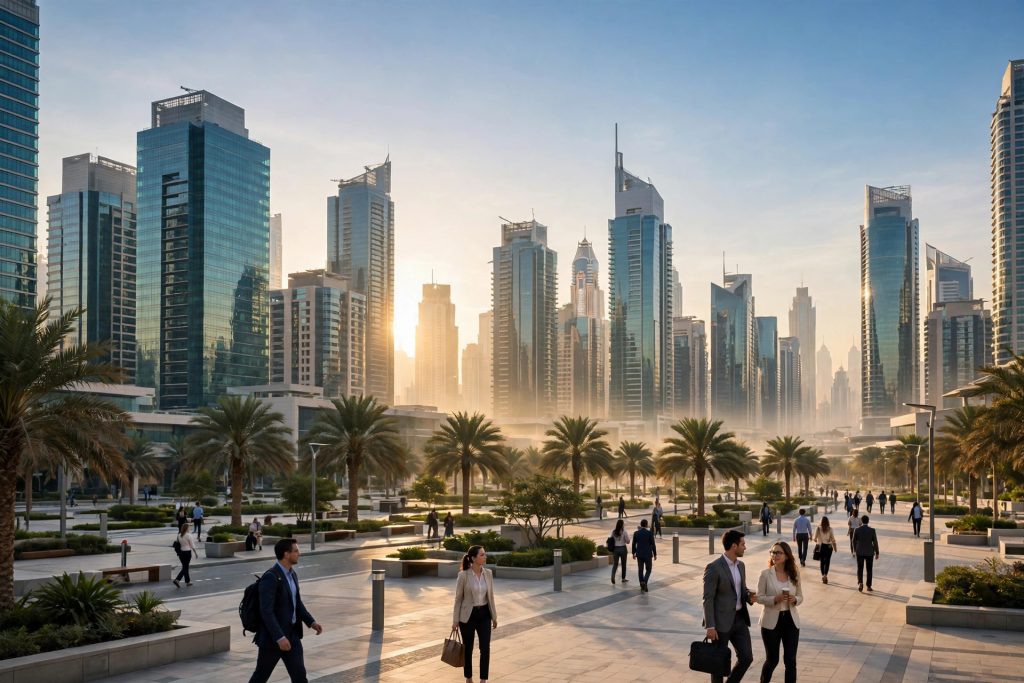
Ask ten people working in Dubai where the jobs are and you’ll get ten different answers. Someone in a glass tower in JLT will tell you the free zones are where everything happens. Someone selling property from an office in Business Bay will say the mainland is the real economy. Both of them are right — and both of them are only seeing half the picture.
Here’s what most newcomers miss: “free zone” and “mainland” aren’t just two words on a trade licence. They decide who your employer answers to, which labour rules cover you, how your visa works, and sometimes even whether you can walk across the road and take a second job. If you’re hunting for work in Dubai, getting this split clear early on saves you from applying to the wrong places and from signing a contract you didn’t fully understand.
What “free zone” and “mainland” actually mean
A mainland company is licensed by the Dubai Department of Economy and Tourism, the old DED. It can trade anywhere in the UAE, sell directly to customers on the street, and open an office in any neighbourhood from Deira to Dubai Marina. Your corner supermarket, the car dealership on Sheikh Zayed Road, the restaurant in your building, the property brokerage in Business Bay — almost all of them are mainland companies.
A free zone company is licensed by one of Dubai’s free zone authorities instead. Each free zone has its own regulator and its own rules. DIFC looks after finance. DMCC looks after commodities and trading. Dubai Internet City and Dubai Media City look after tech and media. JAFZA, out by Jebel Ali port, looks after logistics and manufacturing. There are more than twenty of them, and each one is basically a small business district with its own front door.
For you as a job seeker, the practical difference is this: a free zone company usually does its business inside its zone or internationally, while a mainland company trades freely across the whole UAE. A shop in Mall of the Emirates cannot be a free zone company. A hedge fund in DIFC would not want to be a mainland company. The licence fits the business, and the business decides where the jobs sit.
Where the jobs really are
| Mainland | Free zone | |
|---|---|---|
| Licensed by | Dubai Department of Economy and Tourism (the old DED) | The free zone authority (for example DIFC, DMCC, TECOM zones, JAFZA) |
| Where it can trade | Anywhere in the UAE, selling directly to customers | Usually inside its zone or internationally |
| Labour rules | UAE Labour Law, Federal Decree-Law No. 33 of 2021, administered by MOHRE | The zone’s own employment regulations — DIFC has its own employment law |
| Visa sponsor | Employer sponsors through MOHRE and the ICP | Employer sponsors through its free zone authority |
| Where to complain in a dispute | MOHRE | Usually the zone authority |
| Typical jobs | Retail, restaurants, hotels, construction, transport, property, clinics, schools | Banking and finance (DIFC), tech (Dubai Internet City), media (Dubai Media City), trading (DMCC, JAFZA) |
| Freelance permits | Possible, but fewer routes and heavier paperwork | Offered by several zones, including Dubai Media City, Dubai Internet City, Dubai Knowledge Park, IFZA and RAKEZ |
Honest answer: both sides hire a lot of people, but they hire different kinds of people. Mainland Dubai is bigger in sheer headcount. Think about how many people work in retail, restaurants, hotels, construction, transport, property sales, clinics, schools and small trading firms. That is the mainland, and it is huge. Count every waiter, driver, cashier, receptionist and site engineer in the city, and mainland wins on numbers without a contest.
Free zones punch above their weight in a different way. The jobs there tend to be office-based, better paid on average, and concentrated in a few sectors: banking and finance in DIFC, tech in Dubai Internet City, media and marketing in Dubai Media City, trading in DMCC and JAFZA. The towers in JLT alone hold thousands of companies, from two-person consultancies to regional headquarters of global firms. The work is whiter-collar, the offices are newer, and the hiring is steadier through the year.
The big employers on each side
In the free zones, the employer map looks tidier. DIFC holds banks, asset managers, law firms and fintech startups. Dubai Internet City holds Microsoft, Google, Oracle and a long tail of smaller tech firms. Dubai Media City holds the big advertising networks, broadcasters and production houses. DMCC holds commodity traders, crypto firms and gold businesses. JAFZA holds logistics giants like DP World and the warehouses and factories that keep the port moving.
One pattern worth knowing: multinational companies usually pick a free zone for their regional office, because the setup is familiar and the rules are written with foreign firms in mind. Local family businesses and anything that serves the public directly usually sit on the mainland. If your dream is a global brand on your CV, the free zones are where you’ll find most of those names. If your skills are in a trade, a service, or a local industry, the mainland is where the volume is.
Visas and who sponsors you
Your visa follows your employer, and the route is slightly different on each side. A mainland employer sponsors your residence visa through MOHRE and the Federal Authority for Identity, Citizenship, Customs and Port Security, the ICP. A free zone employer sponsors you through its own free zone authority, which handles the visa process for companies inside the zone. In both cases you end up with a UAE residence visa, an Emirates ID and health insurance. Day to day, the visa in your passport looks and feels the same.
Where it gets interesting is when things change. Work in a free zone and want to move to a mainland company? Your new employer starts a fresh visa process, and the old one gets cancelled. That’s normal and happens every day. The same is true in reverse. It isn’t hard, it just takes a couple of weeks and some paperwork, and you should never resign until the new offer and the visa steps are clear.
Freelance permits are where the free zones really shine. Several zones — Dubai Media City, Dubai Internet City, Dubai Knowledge Park, and others under the TECOM umbrella, plus zones like IFZA and RAKEZ — offer freelance permits for writers, designers, consultants, coaches and tech workers. A freelancer with a permit can work with clients across the UAE, invoice legally, and sponsor their own residence visa. On the mainland, freelancing is possible too, but the routes are fewer and the paperwork can be heavier. If you plan to work for yourself, start by comparing freelance permits across the zones before you commit to anything.
Pay and benefits: is there a real gap?
People love to say free zone jobs pay more. Sometimes they do. A marketing manager in Dubai Media City might earn AED 18,000 to AED 28,000 a month, while a similar role in a small mainland trading firm might pay AED 12,000 to AED 18,000. A compliance officer in DIFC can earn AED 25,000 to AED 45,000, which is hard to match outside the financial district. The free zones hold a lot of the highest-paying office jobs in the city, and nobody serious would deny that.
But averages hide a lot. A senior project manager on a mainland construction job can out-earn a junior analyst in a free zone tower. A head nurse in a mainland hospital can earn more than a customer service team leader in JLT. And once you factor in the whole package — housing allowance, schooling for the kids, annual flights home, health cover, end-of-service gratuity — the gap often narrows. A mainland employer offering AED 15,000 plus housing and schooling can beat a free zone offer of AED 20,000 with nothing on top.
Our advice: compare the full offer, not the headline salary. Ask what the housing allowance actually covers in the area you’d live in. Ask whether the health insurance covers your family or just you. Ask about the flight allowance and whether it is cash or tickets. Two offers that look AED 5,000 apart on paper can end up identical once you do the sums, or the other way around.
Job security and labour rules
This is the part people get wrong most often. Mainland employees are covered by the UAE Labour Law, Federal Decree-Law No. 33 of 2021, administered by MOHRE. That law sets out your rights on working hours, leave, notice periods, termination and end-of-service benefits, and it applies to almost every mainland private-sector worker in the country.
Free zone employees are generally covered by their zone’s own employment regulations instead. DIFC has its own employment law, modelled on international practice. Other zones follow their own rules, which are usually close to the federal law but not identical. In practice, the protections are similar — notice periods, leave, gratuity — but the details can differ, and the place you complain to is different. In a mainland dispute you go to MOHRE. In a free zone dispute you usually start with the zone authority.
Which side suits you?
It depends on what you do and where you are in your working life. Let us break it down by the people we meet most often.
If you are a fresh graduate
Free zones are a strong place to start if your degree is in business, finance, tech, media or marketing. Graduate programmes at the big firms in DIFC and Dubai Internet City are real, structured, and worth applying for. But don’t ignore the mainland. Large mainland groups run graduate schemes too, and a first job at a big local employer can teach you how business actually works in this country, which is knowledge you’ll carry everywhere.
If you are an experienced professional
Follow the employers, not the zones. Make a list of twenty companies you’d love to work for, look up where each one is licensed, and you’ll have your answer. A finance specialist will end up in DIFC or Abu Dhabi Global Market. A logistics manager will end up in JAFZA or Dubai South. A hospital administrator will end up on the mainland. The zone is a side effect of the employer, not the other way around.
If you are a freelancer or consultant
Free zones are usually the easier path. A freelance permit from a media, tech or knowledge zone gives you a legal way to invoice clients, a visa under your own name, and a business setup that clients recognise. Compare the annual cost of the permit across a few zones before you choose, because prices differ, and some zones include visa costs while others charge them separately.
If you work in a trade or a service job
The mainland is your world. Chefs, drivers, electricians, plumbers, salon staff, retail assistants, security guards, cleaners, waiters — almost all of these jobs sit with mainland employers. Free zones have some service roles inside their towers, but the volume is on the mainland, and so are the walk-in interviews and the recruitment agencies that place people in these roles.
The bottom line
Dubai’s job market is really two markets sitting side by side, sharing the same metro lines and the same lunch rush. The mainland is bigger, broader and closer to everyday life in the city. The free zones are sharper, more specialised, and home to most of the global names and the highest office salaries. Neither side is better in general — only better for a particular person, in a particular profession, at a particular point in their career.
So start with yourself, not with the zones. Work out what you do, what you are worth, and which employers need that. Then find out where those employers sit, and go after them. That is where the jobs really are: not in a zone, but in the companies that need someone like you. And if any rule, fee or visa detail in this article has changed since we wrote it — and in the UAE, rules do change — check it with MOHRE or the relevant free zone authority before you act on it.
Related reading
- Part-Time and Flexible Jobs in the UAE: What Actually Exists
- How to Find a Job in the UAE From Abroad
- Abu Dhabi vs Dubai vs Sharjah: Where to Find Work in the UAE
Frequently Asked Questions
What is the difference between mainland and free zone jobs in Dubai?
A mainland company is licensed by the Dubai Department of Economy and Tourism, can trade anywhere in the UAE, and its employees are covered by the UAE Labour Law administered by MOHRE. A free zone company is licensed by its zone authority, usually does business inside its zone or internationally, and its employees are generally covered by that zone’s own employment regulations instead.
Do free zone jobs pay more than mainland jobs?
Sometimes. A marketing manager in Dubai Media City might earn AED 18,000 to AED 28,000 a month while a similar role in a small mainland trading firm might pay AED 12,000 to AED 18,000, and a compliance officer in DIFC can earn AED 25,000 to AED 45,000. But averages hide a lot — a senior mainland project manager or a head nurse can out-earn a junior free zone analyst, and once housing, schooling, flights and health cover are counted, the gap often narrows. Compare the full offer, not the headline salary.
Who sponsors my visa if I work in a free zone?
Your free zone employer sponsors your residence visa through its own free zone authority, which handles the visa process for companies inside the zone. A mainland employer sponsors you through MOHRE and the Federal Authority for Identity, Citizenship, Customs and Port Security (ICP). In both cases you end up with a UAE residence visa, an Emirates ID and health insurance.
Which labour law covers free zone employees?
Free zone employees are generally covered by their zone’s own employment regulations instead of the federal labour law. DIFC has its own employment law, modelled on international practice, and other zones follow their own rules, which are usually close to the federal law but not identical. In practice the protections are similar, but in a dispute you usually start with the zone authority rather than MOHRE.
Can I work freelance in a Dubai free zone?
Yes. Several zones offer freelance permits for writers, designers, consultants, coaches and tech workers, including Dubai Media City, Dubai Internet City, Dubai Knowledge Park and others under the TECOM umbrella, plus zones like IFZA and RAKEZ. A freelancer with a permit can work with clients across the UAE, invoice legally, and sponsor their own residence visa.
Can I move from a free zone job to a mainland job?
Yes. Your new employer starts a fresh visa process and the old one gets cancelled, and the same is true in reverse. It is not hard, it just takes a couple of weeks and some paperwork, and you should never resign until the new offer and the visa steps are clear.
How We Publish Jobs
Every listing here starts from the employer’s own announcement — we do not invent roles, salaries or closing dates. We check each posting before it goes live and show the employer’s original date where we know it. Listings can close or change, so always confirm the latest status on the original posting before you apply. Spotted something wrong or expired? Tell us here and we will check it.

Leave a Reply
You must be logged in to post a comment.