
Job at a Glance
- Salary
- Not disclosed
- Posted
- November 8, 2026
Working in Abu Dhabi is a different deal from working in Dubai: salaries in the capital run a little higher on average, rents in the centre run a little lower, and the pace of life is calmer — but the jobs cluster in government, energy, healthcare, and education, so your options depend heavily on your field. Numbeo’s crowdsourced figures from November 2026 put a one-bedroom flat in the city centre at around AED 7,250 a month and the average monthly net salary at roughly AED 11,265, though professional salaries in the capital commonly run from AED 15,000 to AED 45,000 a month. Check current figures before you sign anything, because rents and salaries move.
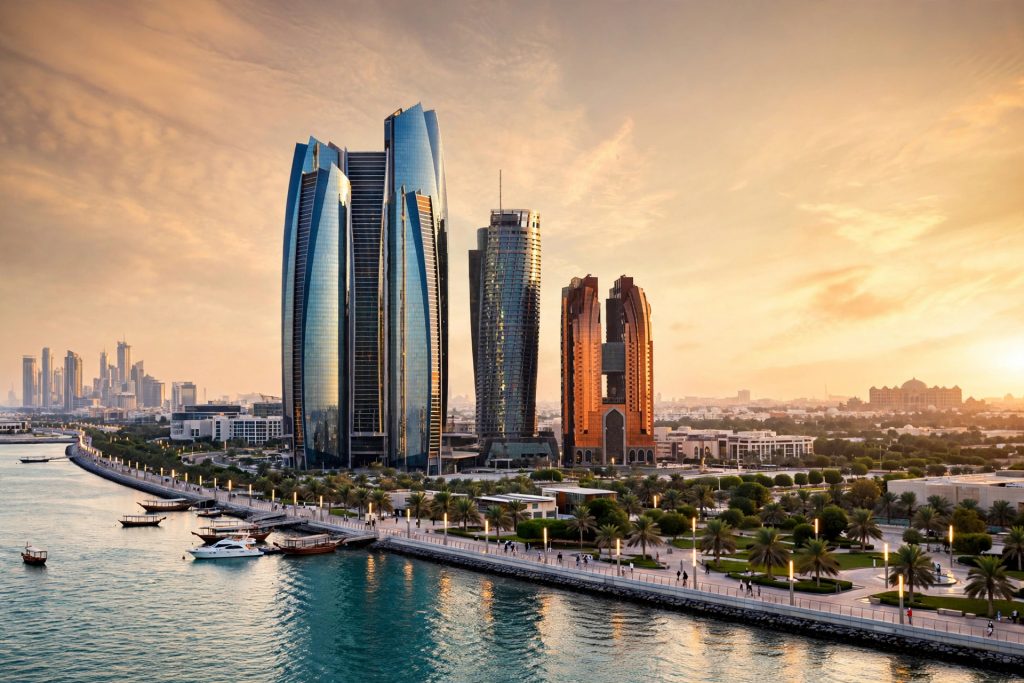
Abu Dhabi is the capital of the UAE and the seat of the federal government, and it shows. The city feels spacious, orderly, and green in a way Dubai does not. The Corniche stretches for kilometres along the water, the Sheikh Zayed Grand Mosque draws visitors from everywhere, and whole districts — Al Reem Island, Saadiyat Island, Yas Island — have grown up in the last fifteen years. For a job seeker, the question is not whether Abu Dhabi is a good place to live. It is whether your skills match what the capital actually hires for, and whether the numbers add up once rent, school fees, and the commute are counted.
What Jobs Are Actually in Abu Dhabi?
Abu Dhabi’s job market is built on four pillars: government, energy, healthcare, and education. The federal government and the Abu Dhabi government are the biggest employers in the emirate, with ministries, departments, and government-owned companies hiring across administration, finance, IT, legal, and policy roles. Many of these roles give preference to UAE nationals under Emiratisation, so expat openings tend to be in specialist, technical, or advisory posts rather than general administration.
Energy is the second pillar, and it is the one that pays best. ADNOC and its group companies, along with the oil and gas service firms around them, hire engineers, geologists, project managers, safety specialists, and technicians. These roles often come with strong packages — housing allowances, annual flights, and schooling support — because the companies compete globally for talent. If you have oil and gas experience, Abu Dhabi is the strongest market in the country for you.
Healthcare is the third pillar. Cleveland Clinic Abu Dhabi, Sheikh Shakhbout Medical City, and the SEHA network run large hospitals that hire doctors, nurses, technicians, and allied health staff year-round. Teaching is the fourth: Abu Dhabi’s public and private schools, plus universities like Khalifa University, NYU Abu Dhabi, and Sorbonne University Abu Dhabi, hire teachers and academics, often with housing and flights included. Hospitality and tourism matter too, especially around Yas Island and Saadiyat, but the volume of hotel and restaurant jobs is smaller than in Dubai.
Salaries: What Can You Expect to Earn?
Salaries in Abu Dhabi are competitive, and for many professional roles they edge ahead of Dubai. One 2026 comparison put the average declared (gross, before deductions) monthly salary in Abu Dhabi at roughly AED 21,800, about 13 percent higher than Dubai’s AED 19,300. Crowdsourced figures like Numbeo’s put the average net (take-home, after deductions) salary lower, at around AED 11,265 a month. The two figures measure different things, so they are not directly comparable. The gap between those numbers tells you something important: averages hide a wide spread, and your pay depends far more on your sector and seniority than on the emirate.
As a rough guide, based on commonly published ranges in 2026: nurses and teachers typically earn in the region of AED 8,000 to AED 18,000 a month, often with housing and flights on top; mid-level engineers and IT professionals often earn AED 15,000 to AED 30,000; senior managers and specialists in energy or finance commonly earn AED 30,000 to AED 60,000 or more; and drivers, security staff, and cleaners generally earn AED 2,000 to AED 4,500. These are broad ranges, not promises. Check current listings for your exact role before you decide what to ask for, and read our salary guides for your profession.
Abu Dhabi pay and rent — at a glance (Nov 2026, check current figures)
| Item | Typical range | Source / note |
|---|---|---|
| One-bedroom flat, city centre | Around AED 5,200–7,250 a month | Numbeo, Nov 2026; varies by area — Al Reem and the Corniche cost more |
| One-bedroom flat, outside the centre | Around AED 4,000–5,250 a month | Numbeo, Nov 2026; areas like Mohammed Bin Zayed City cost less |
| Three-bedroom flat, city centre | Around AED 11,000–13,900 a month | Numbeo, Nov 2026 |
| Average monthly net salary | About AED 11,265 | Numbeo, Nov 2026 — crowdsourced average across all roles |
| Professional salaries | About AED 15,000–45,000 a month | Commonly published 2026 ranges; energy and finance pay more |
| Utilities (85 m² flat) | About AED 540–700 a month | Numbeo, Nov 2026 |
| Single professional monthly budget | About AED 12,000–18,000, excluding rent | Commonly published 2026 guide; check current prices |
Where to Live: The Neighbourhoods That Matter
Where you live in Abu Dhabi shapes your whole week, so pick with the commute in mind. The city is spread out, and a flat that looks cheap on a map can cost you an hour each way.
Al Reem Island is the most popular choice for professionals. It is close to the business districts, full of modern towers, and has supermarkets, gyms, and cafes on the doorstep. A one-bedroom there typically rents for around AED 55,000 to AED 75,000 a year, and a two-bedroom for around AED 80,000 to AED 110,000, based on 2026 listings. Al Maryah Island, next door, is the financial centre — home to ADGM — and suits people working in banking and finance.
The Corniche area and downtown Abu Dhabi suit people who want to be in the middle of things: older buildings, lower rents in some blocks, and the beach a short walk away. Khalifa City and Mohammed Bin Zayed City, further out, offer villas and larger flats at lower rents, and they suit families who want space and do not mind a drive. Saadiyat Island and Yas Island are the premium end — beachfront living, resorts, and the Louvre Abu Dhabi — with rents to match, and villas there commonly running AED 200,000 to AED 380,000 a year or more.
Everyday Costs Beyond the Rent
Rent is the biggest number, but the rest adds up. Utilities for a typical flat run around AED 540 to AED 700 a month, according to Numbeo’s November 2026 figures. Groceries for a single person commonly run AED 1,200 to AED 2,000 a month, depending on how much you cook and whether you buy imported brands. A weekly shop for a family of four runs around AED 880 in Abu Dhabi, a little less than Dubai’s AED 950, according to a 2026 comparison.
Visas, Free Zones, and the ADGM Difference
Most Abu Dhabi workers hold a standard residence visa sponsored by their employer, on the mainland or in a free zone. The process is the same as elsewhere in the UAE: job offer, entry permit, medical test, Emirates ID, and residence visa. Your employer handles it, and the costs sit with the employer, not with you.
Two Abu Dhabi specifics are worth knowing. The first is ADGM, the Abu Dhabi Global Market, the financial free zone on Al Maryah Island. ADGM runs its own employment regulations, separate from the mainland labour law, with its own rules on working hours, leave, and end-of-service benefits. If your job is with an ADGM-licensed firm, your contract follows ADGM rules, not MOHRE’s — read it accordingly, and do not assume the mainland notice periods or gratuity rules apply.
Daily Life and the Commute to Dubai
Abu Dhabi is quieter than Dubai, and for many people that is the point. Evenings on the Corniche, weekend trips to the desert or to Al Ain, the mangrove kayaking at Jubail Island — the city rewards people who like space and a slower rhythm. The food scene is strong, the malls are good, and the beaches are cleaner and less crowded than Dubai’s. Families often say Abu Dhabi is easier with children: less traffic in residential areas, more parks, and schools with shorter waiting lists than the most popular Dubai ones.
Before You Accept an Abu Dhabi Offer
Run through a short checklist before you sign. Is the salary figure basic pay or the full package, and what exactly does the package include — housing, schooling, flights, medical, and how much of each? Which jurisdiction is the contract under — mainland MOHRE, ADGM, or a free zone? What is the notice period, and is it the same for you and the employer? What is the probation period, and what happens if either side ends the contract during it? Where would you live, and does the housing allowance actually cover that area?
Verify the offer the same way you would anywhere in the UAE: check the transaction number with MOHRE, look the company up on the National Economic Register, and call the company on a number you found yourself. And never pay anything for the job or the visa — the employer pays every recruitment cost under UAE law. If someone asks you for money, it is a scam, and you should report it to MOHRE on 600590000.
Related reading
- UAE Job Scams: How to Spot Fake Job Offers and Protect Yourself
- Working in Sharjah: Jobs, Salaries and Everyday Costs
- How to Find a Job in the UAE From Abroad
Frequently Asked Questions
What jobs are most in demand in Abu Dhabi?
Government, energy, healthcare, and education dominate hiring in the capital. ADNOC and its group companies hire engineers and project staff, the big hospitals hire doctors and nurses, and schools and universities hire teachers and academics. Government roles often give preference to UAE nationals under Emiratisation, so expat openings tend to be specialist or technical posts.
How much do you need to earn to live comfortably in Abu Dhabi?
A single professional commonly needs around AED 12,000 to AED 18,000 a month, excluding rent, for a comfortable lifestyle, according to 2026 guides, while a family of four often needs AED 25,000 to AED 40,000 before housing. Rent is the biggest variable: a one-bedroom in the centre runs around AED 5,200 to AED 7,250 a month. Check current rents for the area you want before you accept an offer.
Is Abu Dhabi cheaper than Dubai?
Yes, in most categories. A one-bedroom flat in central Abu Dhabi costs roughly AED 5,200 to AED 7,250 a month, against around AED 8,500 to AED 9,230 in central Dubai, according to Numbeo’s November 2026 figures. Groceries and utilities are also a little lower. Average salaries in Abu Dhabi are similar to or slightly higher than Dubai’s, so the capital often leaves more room to save.
Do I need a car in Abu Dhabi?
It helps a lot. Abu Dhabi has no metro yet, and the city is spread out, so a car makes daily life much easier. Buses are cheap and cover the main routes, and taxis are plentiful, but most long-term residents drive. If your employer provides a car or a transport allowance, that is worth real money — factor it into your decision.
What is ADGM and does it change my contract?
ADGM is the Abu Dhabi Global Market, the financial free zone on Al Maryah Island. It runs its own employment regulations, separate from mainland labour law, with its own rules on hours, leave, and end-of-service benefits. If your job is with an ADGM-licensed firm, your contract follows ADGM rules, not MOHRE’s, so read it on that basis.
Can I live in Dubai and work in Abu Dhabi?
Yes, and many people do, but the drive takes around 90 minutes each way in normal traffic. A daily commute is tiring, and most people who try it eventually move closer to work. If you are weighing it, count the fuel, tolls, and lost hours honestly before you agree, and consider whether the rent saving is really worth it.
How We Publish Jobs
Every listing here starts from the employer’s own announcement — we do not invent roles, salaries or closing dates. We check each posting before it goes live and show the employer’s original date where we know it. Listings can close or change, so always confirm the latest status on the original posting before you apply. Spotted something wrong or expired? Tell us here and we will check it.




Leave a Reply
You must be logged in to post a comment.