
Job at a Glance
- Salary
- Not disclosed
- Posted
- November 6, 2026
Blue-collar pay in the UAE runs from about AED 1,200 a month for a general labourer to AED 9,000 for a site foreman, with most drivers, guards, riders and cleaners earning between AED 1,800 and AED 5,000. The figures below are ranges, not promises — and the package around the salary (accommodation, transport, food, overtime) often matters as much as the headline number.
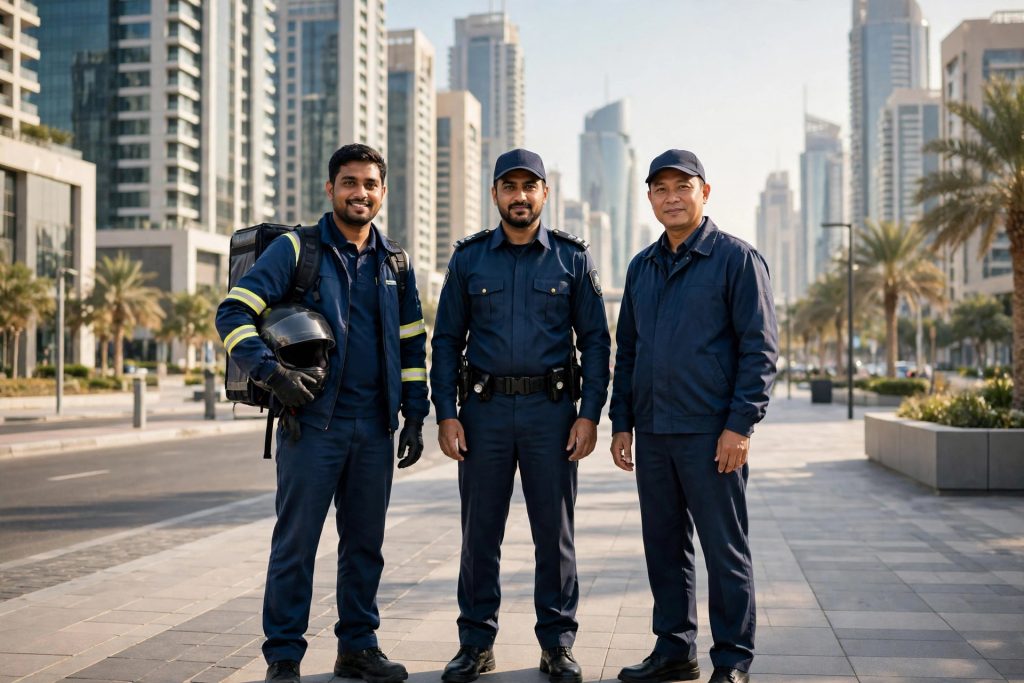
Every morning before sunrise, the UAE is already moving — and it’s moving because of blue-collar workers. The taxi driver taking the nurse to her 6 a.m. shift. The security guard opening the mall gates. The delivery rider weaving through Business Bay traffic with someone’s breakfast. The cleaner mopping the office floor before anyone arrives. The scaffolder thirty floors up on a tower in Dubai Marina. These are the jobs that keep the country running, yet when people talk about UAE salaries, these are the jobs nobody talks about.
That’s a problem, because millions of people do this work, and not knowing the going rate costs them money. A driver who doesn’t know what’s normal accepts the first offer. A security guard signs a contract without knowing overtime is owed. A delivery rider takes a job that pays per drop without realising how the maths works on a slow week. So this guide puts real numbers on the table — ranges, not promises — so you know what’s normal, what’s low, and what’s worth walking away from.
Drivers: Taxi, Heavy, Light and Company
Driving is one of the biggest blue-collar job categories in the UAE, and pay varies a lot depending on what you drive and who you drive for.
For the full breakdown — pay by vehicle, licence categories and the visa route — see our guide to driver salary in Dubai.
Taxi drivers in Dubai typically work on a commission basis rather than a fixed salary. The Roads and Transport Authority sets the framework, and drivers usually earn a percentage of what they take in fares, often working 12-hour shifts. A busy driver can take home AED 3,500 to AED 5,000 a month. A slow month, or a driver still learning the roads, might see AED 2,500 to AED 3,500.
Heavy-duty drivers — the men behind the wheel of trucks, trailers and construction vehicles — earn more. A heavy driver with a valid UAE licence typically earns AED 3,000 to AED 5,000 a month, with larger companies in construction and logistics paying towards the top of that range. Some roles add overtime and allowances for long-distance runs. The licence matters here: a heavy licence costs time and money to get, and employers pay a premium for drivers who already hold one. Planning to come to the UAE as a driver? Sorting out your licence before you arrive — or as soon as you land — is the single best investment you can make.
Light vehicle drivers — company drivers, delivery van drivers, school bus drivers — usually earn AED 2,500 to AED 4,000 a month. A private family driver in a villa in Jumeirah or Al Barsha might earn AED 3,000 to AED 4,500, often with accommodation and food included. School bus drivers work split shifts — early morning and early afternoon — and earn around AED 2,500 to AED 3,500.
One thing drivers should always check: who pays for the licence, the visa and the medical test? Reputable employers cover these costs. If an agent or an employer asks you to pay thousands of dirhams upfront for a “driving job” before you’ve even arrived, that’s a red flag. Legitimate employers don’t charge you to hire you.
Delivery Riders: The New Blue-Collar Job
Ten years ago, delivery riding barely existed. Today, riders in Talabat, Careem, Deliveroo and Noon jackets are everywhere — and the pay works differently from almost any other blue-collar job in the country.
Most riders are paid per delivery, not per month. Rates vary by company and by area, but a common structure works out to roughly AED 7 to AED 10 per completed order, sometimes with bonuses for hitting targets or working peak hours. A rider doing 20 to 25 deliveries a day, six days a week, might earn AED 4,000 to AED 6,000 a month. A slower rider, or one working a quiet area, might earn AED 3,000 to AED 4,000. Friday evenings and Ramadan nights are the busiest times — and the best-paying.
But the headline number isn’t the whole story. Riders usually have to cover their own petrol, and many rent their bikes from the company or an agent. A bike rental can cost AED 500 to AED 800 a month. Petrol adds more. Some companies provide the bike and fuel, and those roles are worth more even if the per-delivery rate looks lower. Always ask: who provides the bike, who pays for petrol, and who pays if the bike breaks down? The answers change your real income by a thousand dirhams or more.
Riders should also know the work is physically hard and the hours are long. Twelve-hour days in August heat are normal in this job. If you’re considering it, go in with your eyes open — and make sure your visa and medical insurance are properly sorted by whoever is employing you, whether that’s the platform or a third-party fleet company.
Security Guards: Steady Work, Modest Pay
Security is one of the largest employers of blue-collar workers in the UAE. Every mall, every tower, every school and every hotel needs guards, and the jobs are steady — which is part of their appeal.
A security guard in Dubai or Abu Dhabi typically earns AED 2,200 to AED 3,500 a month. The range depends on the employer and the site. Guards working for large security companies on prestige sites — a five-star hotel, a government building, a big mall — tend to earn more than guards on small residential buildings. Supervisors and team leaders earn AED 3,500 to AED 5,000. Guards with a SIRA licence in Dubai, or the equivalent approval in Abu Dhabi, earn more than those without one, and the licence is usually arranged and paid for by the employer.
Most security roles come with accommodation and transport. A guard earning AED 2,500 with a shared room and a bus to work can save more than a guard earning AED 3,500 who pays rent. Shifts are usually 12 hours, and overtime is common — check your contract, because overtime pay is a legal entitlement under UAE labour law.
The work itself is mostly calm — long hours standing, checking IDs, doing rounds — but it demands patience and a clean record. Guards who are reliable, well-presented and good with people get promoted to supervisor roles, and from there into facilities management. It’s a slow ladder, but it’s a real one.
Cleaners, Helpers and Housekeeping Staff
Cleaners are everywhere in the UAE and, frankly, underpaid relative to how hard the work is. A cleaner working for a cleaning company in Dubai typically earns AED 1,800 to AED 2,500 a month. Hotel housekeeping staff earn a similar range, AED 2,000 to AED 3,000, with tips and service charge sometimes adding a few hundred dirhams. Office cleaners, mall cleaners and school cleaners sit in the same bracket.
Most cleaning companies provide accommodation and transport, and some provide food. That matters, because on AED 2,000 a month with no accommodation, life in Dubai is very hard. On AED 2,000 with a bed and a bus, it’s manageable. Always ask what’s included before you accept.
Domestic workers — maids, nannies and cooks working in private homes — are covered by a separate law, and their pay is usually set in the contract with the family. A live-in maid in Dubai commonly earns AED 2,000 to AED 3,500 a month, depending on experience and duties, with accommodation and food included. Nannies with childcare experience or a driving licence earn more.
For cleaners who want to earn more, the route is usually through supervision. A cleaning supervisor in a hotel or a facilities company can earn AED 3,500 to AED 5,000, and the jump from cleaner to supervisor is one of the most realistic promotions in blue-collar work. It takes reliability, basic English, and the ability to manage a small team — all learnable on the job.
Construction Workers: The Backbone of the Skyline
Construction employs more blue-collar workers than any other sector in the UAE, and pay varies hugely by skill. A general labourer — carrying, digging, site cleaning — typically earns AED 1,200 to AED 1,800 a month. It’s the lowest-paid work in the country, and it’s hard, physical labour in extreme heat. Accommodation, transport and food are almost always provided, which is the only reason the numbers work at all.
Skilled trades pay much better. A mason or steel fixer earns around AED 1,800 to AED 2,800. A carpenter earns AED 2,000 to AED 3,500. An electrician or plumber earns AED 2,500 to AED 4,500. A welder earns AED 2,500 to AED 4,000. Foremen and site supervisors earn AED 5,000 to AED 9,000. The gap between a labourer and a skilled tradesman is the gap between a job and a career — and it’s bridged by training, certification and experience.
Construction workers should know their rights around heat. UAE law bans work in direct sunlight during the hottest midday hours in the summer months, and employers must provide water, shade and rest. If you’re made to work through the midday break in July, that’s a violation — and MOHRE takes it seriously.
What Else Comes With the Job?
For blue-collar roles, the salary is often less than half the story. The package around it decides whether you can actually save money. Four things matter most.
Accommodation. The single biggest factor. A shared room provided by the employer saves you AED 500 to AED 1,500 a month in rent. Ask where it is, how many people share a room, and whether it’s close to your workplace.
Food. Some employers provide meals or a food allowance of AED 300 to AED 500 a month. Others don’t. On a salary of AED 2,000, food is a significant cost — budget around AED 400 to AED 600 a month if you’re cooking for yourself.
Transport. A company bus to and from work saves you bus fares and hours of hassle. If transport isn’t provided, factor in the cost of getting to work every day — and the time.
Medical insurance and flights. Your employer is legally required to provide medical insurance, and most blue-collar contracts include an annual flight home or a flight allowance. Check both are in your contract. If they’re missing, something is wrong.
How to Avoid the Traps
Blue-collar workers are the most targeted by job scams in the UAE, and the traps are always the same. An agent asks for a fee upfront — AED 2,000, AED 5,000, sometimes more — for a “guaranteed” job. A company offers a great salary but the contract that arrives says something different. A sponsor keeps your passport. All of these are red flags.
Here are the rules that protect you. Never pay a recruitment fee for a job in the UAE — legitimate employers pay the recruiter, not you. Never hand your passport to anyone except the authorities processing your visa. Always read your MOHRE contract and check that the salary, the job title and the employer name match what you were promised.
If something goes wrong, MOHRE is there for you. You can file a complaint through their app or call centre, and they deal with unpaid salaries, withheld passports and contract violations every day. Keep your contract, your pay slips and any messages from your employer. They’re your evidence.
The Bottom Line
Salary at a Glance
Typical monthly ranges from this guide. Always compare the full package, not just the salary figure.
| Role | Typical monthly pay (AED) | Notes |
|---|---|---|
| General labourer (construction) | 1,200–1,800 | Accommodation, transport and food almost always provided |
| Cleaner (cleaning company) | 1,800–2,500 | Most companies provide accommodation and transport |
| Hotel housekeeping | 2,000–3,000 | Tips and service charge sometimes add a few hundred dirhams |
| Live-in maid / domestic worker | 2,000–3,500 | Accommodation and food included; covered by a separate law |
| Security guard | 2,200–3,500 | More on prestige sites; SIRA licence earns more |
| Taxi driver (Dubai, commission) | 2,500–5,000 | Busy driver 3,500–5,000; slow month 2,500–3,500 |
| Light vehicle / company driver | 2,500–4,000 | School bus drivers around 2,500–3,500 |
| Private family driver | 3,000–4,500 | Often with accommodation and food included |
| Heavy-duty driver | 3,000–5,000 | Valid UAE heavy licence earns a premium; overtime on long runs |
| Delivery rider | 3,000–6,000 | Paid per delivery, roughly AED 7–10 per order; bike rental AED 500–800 a month |
| Cleaning supervisor | 3,500–5,000 | Common promotion route from cleaner |
| Security supervisor / team leader | 3,500–5,000 | Promotion from guard roles |
| Skilled trades (mason, carpenter, electrician, plumber, welder) | 1,800–4,500 | Electricians and plumbers 2,500–4,500; welders 2,500–4,000 |
| Foreman / site supervisor | 5,000–9,000 | Top of the construction ladder in this guide |
Blue-collar work in the UAE pays modestly, but it pays — and for millions of people, it’s the foundation of a better life for their families back home. The difference between a good blue-collar job and a bad one usually isn’t the salary figure on the advert. It’s the accommodation, the transport, the overtime, the licence, and whether the employer is honest.
So before you sign anything, look past the headline number. Ask about the room, the bus, the food, the overtime, and who pays for the licence. A job that looks smaller on paper can leave you with more in your pocket at the end of the month — and a job that looks generous can leave you with almost nothing once rent and petrol are paid. The numbers in this guide are your starting point. Use them, check them against your own offer, and don’t be afraid to walk away from one that doesn’t add up.
Related reading
- End-of-Service Gratuity in the UAE: How Much Will You Get?
- UAE Salaries by Emirate: Where Do You Earn More?
- UAE Salaries for Healthcare, Teaching and Engineering Roles
Frequently Asked Questions
How much does a taxi driver earn in Dubai?
Taxi drivers in Dubai typically work on commission rather than a fixed salary, usually on 12-hour shifts. A busy driver can take home AED 3,500 to AED 5,000 a month, while a slow month, or a driver still learning the roads, might see AED 2,500 to AED 3,500.
How much do delivery riders earn in the UAE?
Most riders are paid per delivery, roughly AED 7 to AED 10 per completed order, sometimes with bonuses for targets or peak hours. A rider doing 20 to 25 deliveries a day, six days a week, might earn AED 4,000 to AED 6,000 a month, while a slower rider might earn AED 3,000 to AED 4,000. Remember the costs: bike rental can be AED 500 to AED 800 a month and riders usually pay their own petrol.
What is the salary of a security guard in the UAE?
A security guard in Dubai or Abu Dhabi typically earns AED 2,200 to AED 3,500 a month, depending on the employer and the site. Guards on prestige sites such as five-star hotels, government buildings and big malls tend to earn more, and supervisors and team leaders earn AED 3,500 to AED 5,000. Most roles come with accommodation and transport, and shifts are usually 12 hours.
How much do construction workers earn in the UAE?
A general labourer typically earns AED 1,200 to AED 1,800 a month, while skilled trades pay much better: a mason or steel fixer around AED 1,800 to AED 2,800, a carpenter AED 2,000 to AED 3,500, an electrician or plumber AED 2,500 to AED 4,500, and a welder AED 2,500 to AED 4,000. Foremen and site supervisors earn AED 5,000 to AED 9,000.
Do blue-collar employers in the UAE provide accommodation?
Most do. Cleaning and security companies usually provide accommodation and transport, construction employers almost always provide accommodation, transport and food, and many driver roles include accommodation. Always ask what is included before you accept, because a shared room provided by the employer saves AED 500 to AED 1,500 a month in rent.
Should I pay a recruitment fee for a job in the UAE?
No. Never pay a recruitment fee for a job in the UAE — legitimate employers pay the recruiter, not you. Never hand your passport to anyone except the authorities processing your visa, and always read your MOHRE contract to check the salary, job title and employer name match what you were promised. If something goes wrong, file a complaint with MOHRE through their app or call centre.
How We Publish Jobs
Every listing here starts from the employer’s own announcement — we do not invent roles, salaries or closing dates. We check each posting before it goes live and show the employer’s original date where we know it. Listings can close or change, so always confirm the latest status on the original posting before you apply. Spotted something wrong or expired? Tell us here and we will check it.




Leave a Reply
You must be logged in to post a comment.